



Municipalities and insurance companies must collaborate more closely to reduce climate risk and secure assets.
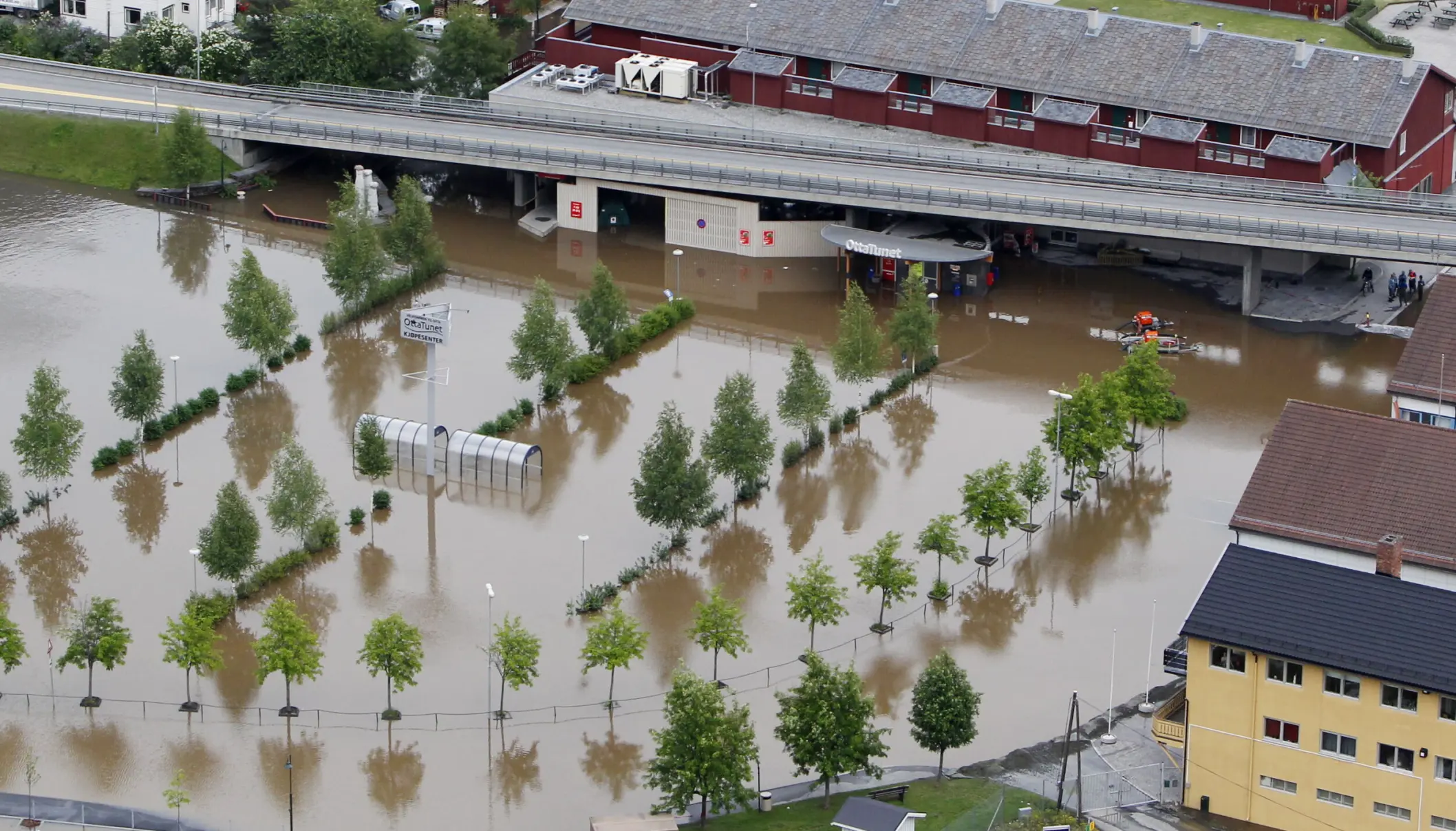
Several insurance companies have taken action against municipalities to give climate risk greater consideration when purchasing non-life insurance, according to the writers.
Illustration photo: Håkon Mosvold Larsen / NTB
Opinions in debate posts are the responsibility of the writer.
Climate adaptation requirements in procurement, and especially in the procurement of insurance, is a little-studied topic. The EU-funded research project SOTERIA has therefore explored how municipalities can reduce their climate risk through new measures in the insurance procurement process.
This article summarizes some of the findings from the project.
How can climate risk be given greater consideration when purchasing non-life insurance?
Most Norwegian municipalities purchase insurance every four years. Around 80 percent use insurance brokers, while some buy directly from the insurance company or collaborate with other municipalities.
Today, there are three main players in the market for property insurance for municipalities and counties: Gjensidige, KLP, and Protector Forsikring ASA.
Municipalities often insure the entire building stock, and the price they receive is based on average considerations.
The largest buildings receive the most attention in risk assessment, and high deductibles act as an incentive for both loss prevention and reduced insurance costs.
But how can climate risk be given greater consideration when purchasing non-life insurance?
Measures to prevent climate damage for commercial and private buildings are rewarded by Gjensidige.
Now, several actors have also taken action against the municipalities:
- KLP offers a lower deductible for documented damage prevention measures and includes stormwater risk in the pricing.
- KLP’s politician dashboard provides an overview of the maintenance of municipal buildings.
- In its tenders, Söderberg & Partners has placed equal emphasis on price and quality, where climate and damage prevention are included in the quality criteria.
- Møre og Romsdal County Council holds regular meetings with principals at its school buildings to strengthen attitudes towards maintenance and damage prevention.
- Several municipalities have, among other things, through the Klimasats funds, employed climate/environmental advisors in the purchasing department.
From 2024, it was required that public procurement should initially give at least 30 percent weight to climate and environmental considerations (sections 7–9 of the Procurement Regulations). Climate considerations in this context are about greenhouse gas emissions, not climate adaptation.
Can damage prevention be considered an environmental measure – and thus part of sustainable procurement?
Many believe yes. Preventing climate-related damage reduces both resource use and greenhouse gas emissions associated with reconstruction, and should therefore be seen as an important element in a sustainability perspective. But the market has not yet adopted common definitions of sustainable insurance.
To succeed in giving climate risk a greater place when purchasing insurance, municipalities and the insurance industry must collaborate more closely. It is about:
- Expertise sharing – both about risk and procurement.
- Joint development of requirements for damage prevention and sustainability.
- Training and education across sectors.
- Market dialogue and common meeting places.
Municipalities can make demands on insurance companies and/or insurance brokers regarding:
- Environmental certification and sustainable practices.
- Coverages that provide an upgrade to newer environmental standards when rebuilding after damage.
- That climate adaptation is a topic in dialogue between insurance companies and brokers.
- Sharing knowledge and insight into climate risk and damage prevention measures.
Insurance companies can require municipalities to:
- System for managing climate vulnerability and risk.
- Documented damage prevention measures.
- Risk assessment and systematic use of implemented FDV system.
- Annual participation in dialogue meetings and training.
At the state level, clearer guidelines should be established to ensure that climate adaptation and damage prevention are prioritized, including in procurement.
There are studies, such as CICERO’s climate study from 2023, that show that small and medium-sized municipalities in particular want clearer climate requirements, because it makes it easier to implement climate measures. The increasing consequences of climate change are making the topic relevant, and we expect significant developments on the topic of climate risk and the acquisition of insurance. There is potential for profit here for both the municipality and insurance, which has not yet been realized.
This article was originally published in the Kommunal Rapport: https://www.kommunal-rapport.no/meninger/klimatilpasning-horer-hjemme-i-forsikringsavtalen/828015